After a Palm Sunday massacre left 56 dead, CSI followed up with survivors, documenting the aftereffects of a systematic campaign of attacks targeting Nigerian Christians across Plateau State.
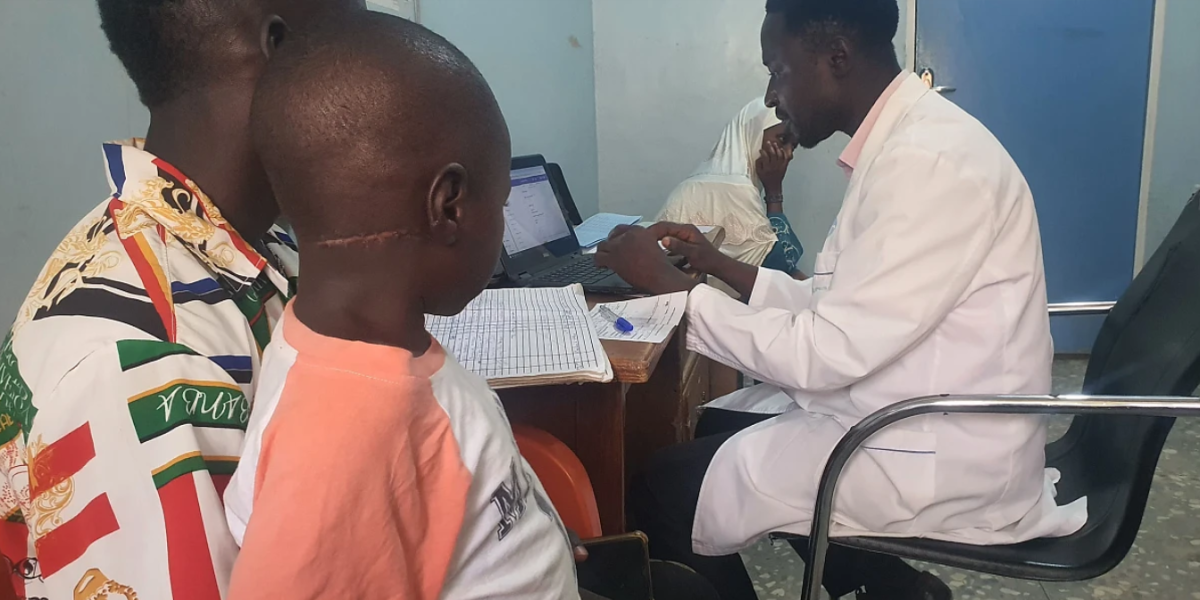
In Nigeria’s Plateau State, a doctor checks seven-year-old Nenche Stephen for progress on the healing of a critical machete wound he sustained to the neck during April attacks by Fulani fighters. csi
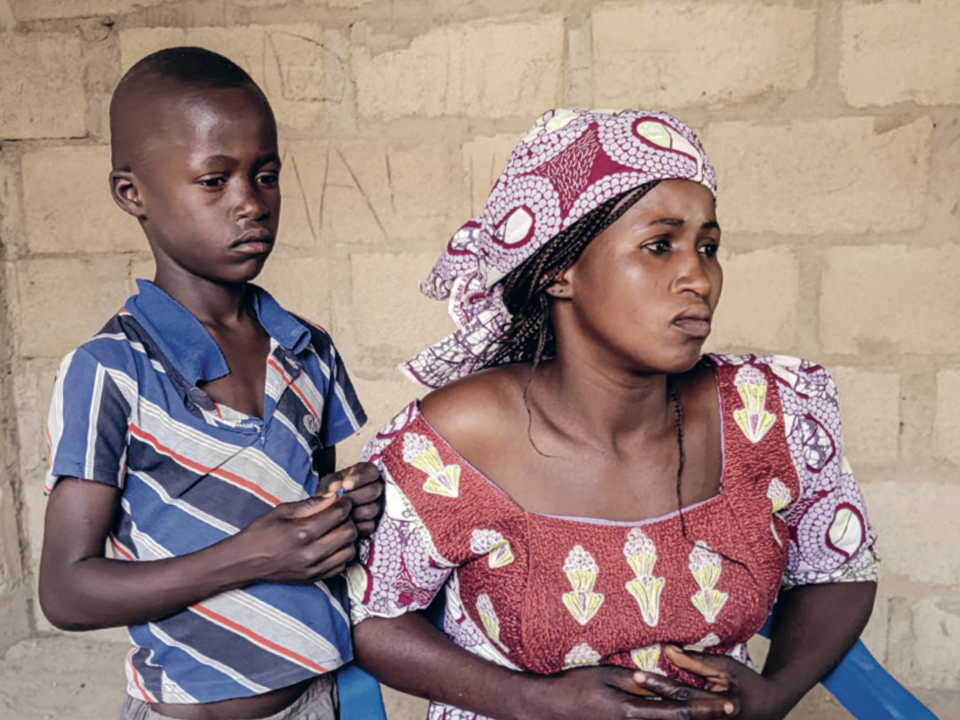
Two months after losing her husband, two young children, and seven other family members in a brutal attack on their village, Alice Stephen is slowly beginning to rebuild her life with the help of CSI’s local partners.
Mrs. Stephen, who was gravely injured during the April 13 assault on Zike village in Plateau State, Nigeria, spent many weeks hospitalized alongside her only surviving child, seven-year-old Nenche Stephen. The boy suffered severe machete wounds to his neck but miraculously survived after attackers left him for dead.
“We were asleep when the attackers came,” Mrs. Stephen recalled during an emotional interview at Enos Private Hospital in Miango. “They stormed into our room, shooting and slashing with swords. They killed my husband in front of me and then murdered my baby, Mary, who was just eight months old, and Nanna, my three-year-old daughter.”
The massacre in the middle of the night on Zike village in the Bassa Local Government Area (LGA) was part of a coordinated assault by Fulani fighters. This particular attack killed 56 people, 15 of whom were children, with nine injured and over 2,000 people displaced, while 103 houses were completely razed.
Hospital struggles after Fulani attacks
Dr. Joseph Abel, managing director of Enos Private Hospital, has continued treating attack victims despite mounting unpaid medical bills. His facility in the Bassa LGA has become a lifeline for survivors like the Stephens, but the financial strain threatens its ability to operate.
“This is my contribution to humanity, but this hospital is still a business that needs to stay operational,” Dr. Abel explained. “If the debts continue to pile up, we may be forced to shut down—leaving future victims without help.”
The doctor has compiled a detailed list of outstanding bills to seek external support so the hospital can continue providing medical care for attack survivors.
Pattern of systematic violence against Nigerian Christians
The April 13 Palm Sunday massacre in Zike village was the deadliest in a series of attacks that Christian Solidarity International documented across Plateau State earlier this year. Between March 24 and April 13, Fulani militia attacks killed a total of 126 Nigerian Christians, including women and children, while some 7,000 more have been displaced.
During April, CSI’s project manager Franco Majok visited Plateau State for several days and reported disturbing patterns in the violence: “Since I arrived, there has been an attack on Christian villages every night.” In his hospital visits, “the majority of the victims had been hacked on the back of their necks with machetes.”
At the hospital, CSI staff also met young Nenche Stephen, who witnessed the slaughter of his family. Fulani militiamen shot the seven-year-old’s father dead in the April 13 attack, and then used machetes to injure his mother and kill his two siblings. Nenche was hacked on the neck with a machete and left for dead. Three days later in his hospital room, he was still screaming and vomiting from the pain.
Systematic jihadist campaign against Christians
The violence represents more than isolated incidents. Since 2018, militias from the Muslim Fulani ethnic group have been systematically attacking Christian villages in Nigeria’s fertile Middle Belt region, occupying their land and displacing millions.
CSI President Dr. John Eibner characterized the violence as driven by “the longstanding determination of Nigeria’s Muslim Fulani-dominated ruling class to gain dominion over the predominantly Christian Middle Belt”. He described the Fulani militias as their instruments, stating they are “waging jihad – in pursuit of the same goals as their spiritual and political forefather, Usman Dan Fodio, the founder of Nigeria’s 19th century Fulani-led caliphate”.
Support for survivors in Nigeria’s Plateau State
Peter John, Mrs. Stephen’s brother-in-law who also lost family members in the attack, described the devastating impact on their community. “Since the attack, life has become unbearable,” he said. “We lost our home, our support system, and any sense of security. Alice can no longer farm or run a business. Stephen needs a new school, but we can’t afford one.”
Local partners in Nigeria working with CSI have committed to providing Mrs. Stephen and Nenche with housing, food assistance, and school fees for the boy’s education. This support addresses what CSI identifies as urgent needs: “food, medical treatments, fertilizers for farming as the rainy season is about to start, and roofing materials for destroyed houses”.
CSI has been providing aid to victims of Islamist terrorist attacks in Nigeria and continues to advocate for the protection of Christian communities in the Middle Belt region.