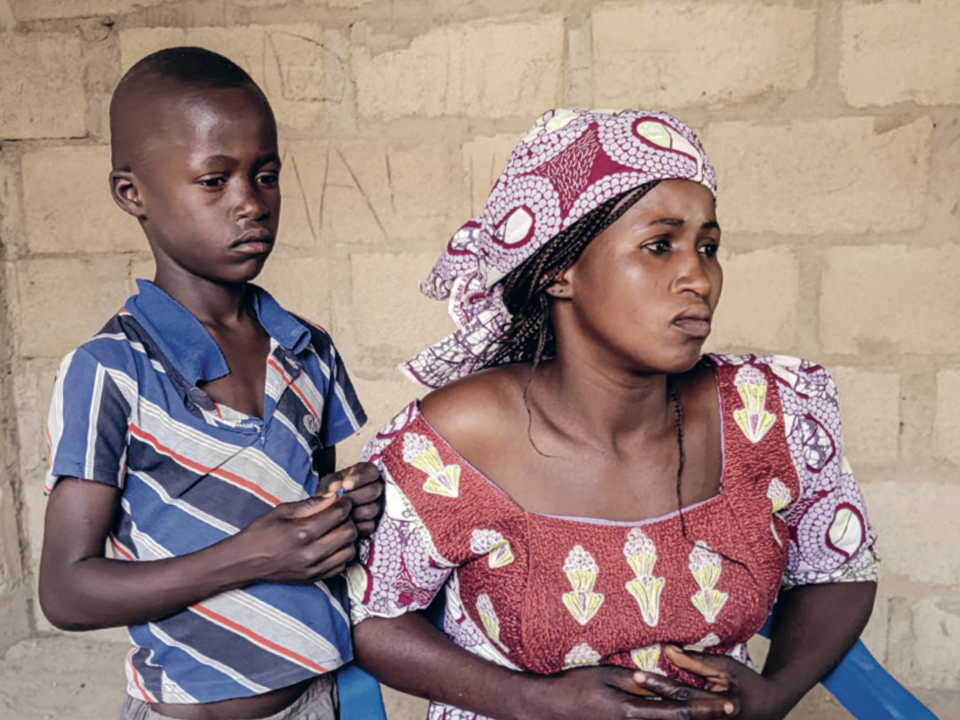
The religious minority in the former Hindu monarchy fears attacks amid instability, army deployment and arrests. The collapse of Nepal’s government following mass protests has created a security vacuum and left the country’s Christian minority deeply anxious about their safety and future.
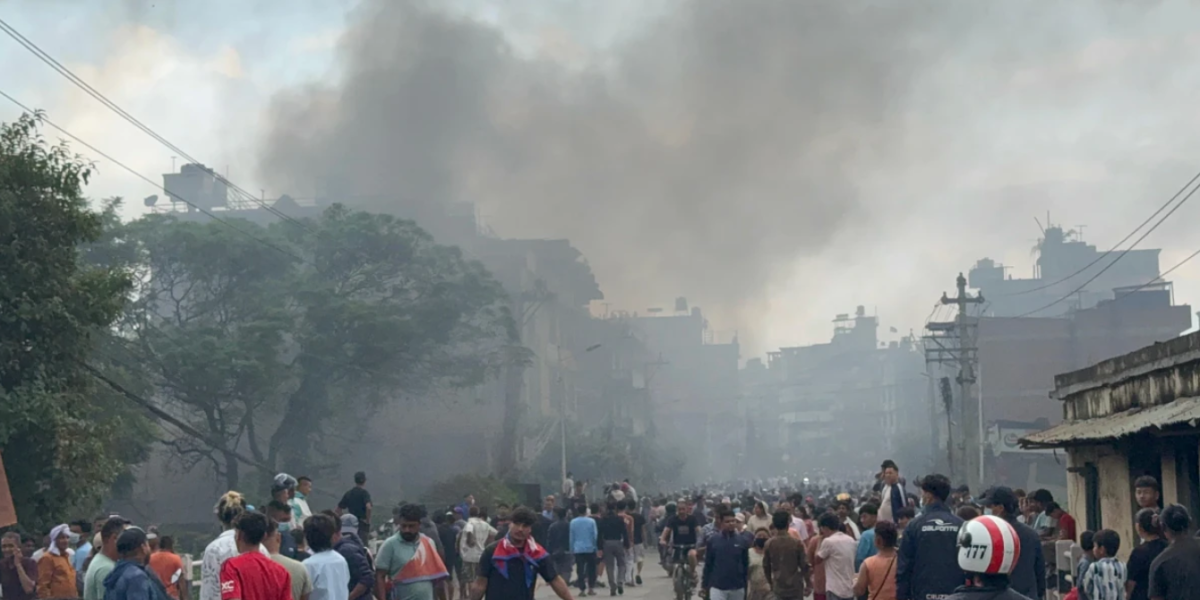
Gen Z protesters take to the streets in Nepal. provided to csi
The uncertainty has already led to threats against churches and raised fears of violence by extremist groups taking advantage of the lawlessness, according to CSI’s partner in the former Hindu monarchy.
After protesters and police clash, prime minister flees as violence erupts
On September 8, protests led by Gen Z citizens swept through the country after the government imposed a ban on major social media platforms. The demonstrations escalated quickly after security forces fired live ammunition, killing at least 19 young people and injuring hundreds. On September 9, protesters stormed political party offices, police stations and ministers’ homes.
By the next morning, much of the capital’s political infrastructure had been attacked, including the prime minister’s residence. According to reports, other groups with their own vested interests joined the protest and are believed to have carried out much of the vandalism and the physical attacks on ministers. Curfews were declared, defied and then reimposed. Some ministerial residences were attacked, including the house of Prime Minister KP Sharma Oli. Former Prime Minister Sher Bahadur Deuba and his wife, Foreign Minister Arzu Rana Deuba, were injured during an attack on their house. Prime Minister Oli resigned, fled and remains in hiding.
The army was deployed after police reportedly lost control of the situation.
Frustrated, Gen Z’s protests demand political overhaul
Nepal’s Gen Z protesters took to the streets not simply over the government’s temporary shutdown of social media platforms, but because the move brought their long-standing frustration with the country’s ruling elite to the surface. For years, young citizens have watched older political parties fail to address unemployment, inflation and corruption.
They have also seen a new model of leadership emerge in figures like Kathmandu Mayor Balendra Shah and Dharan Mayor Harka Sampang, who bypassed party politics, used social media to engage directly with the public and delivered tangible improvements in civic life. The social media ban was widely perceived as an attempt to silence these new voices and protect a political class that has remained unaccountable.
This generation, educated and digitally connected, no longer believes in reform through the same parties that have overseen repeated governance failures. Their protest is a demand for wholesale political change, driven by a belief that responsible, transparent leadership is not only possible but overdue.
Threats against Christians grow
In this volatile environment, Christian leaders in Nepal have expressed growing fears that the community, already under pressure from Hindu nationalist groups in recent years, may be targeted.
One local church partner said that Christians across the country are worried about the destruction and potential violence. Churches in western Nepal have already been threatened by groups of young men, CSI has learned. In one case, the police refused to intervene, asking the pastor to instead contact the army, which was unreachable. Fearing an attack, the congregation moved their equipment to safety and began round-the-clock prayer inside the church.
Elsewhere, a pastor near the Indian border reported the presence of Indian military forces assembling nearby, adding to the uncertainty. Local Christian networks are primarily reacting with prayer and vigilance, but there is rising concern that extremists or pro-monarchy factions could exploit the chaos to incite targeted violence.
Power vacuum leaves law enforcement in disarray
The current power vacuum is particularly dangerous because law enforcement mechanisms are in disarray. More than 13,000 prisoners reportedly escaped from jail during the unrest, and the army’s control has not yet brought reassurance. Police have said they are unable to respond to threats, and there is no clear civilian leadership currently directing emergency response.
Religious freedom guarantees not upheld in practice
While Nepal’s constitution guarantees secularism, India-backed Hindu nationalist groups have been expanding their presence in Nepal, promoting reconversion campaigns that target Christians. These groups organize rituals aimed at “bringing back” Christians to Hinduism. The term used is “Ghar Wapsi,” meaning “return home,” especially in border districts like Sunsari and Morang.
Nepal’s “anti-conversion” law has been used selectively, with cases filed against Christians for evangelizing while reconversion to Hinduism is allowed without scrutiny. Foreign Christian visitors have also been deported.
One of the primary concerns now is that Hindu nationalist groups and pro-monarchy movements could try to assert themselves during the breakdown of state control. Nepal remained a Hindu monarchy for more than two and a half centuries, from its unification under King Prithvi Narayan Shah in 1768 until 2008. The monarchy was abolished after a decade-long Maoist (extreme Marxist) insurgency and a mass pro-democracy movement forced political parties and the king to agree to a secular federal republic.
Christians face heightened safety risks in current crisis
The CSI partner in Nepal noted that while the current protests are directed at the political class and not religious groups, the lack of clarity around who is instigating the violence leaves open the possibility of targeted actions against minorities. They believe that actors who support the return of the monarchy may try to leverage the crisis. These movements are ideologically aligned with India’s Hindu right, and many have openly expressed a desire to reinstate Nepal’s identity as a Hindu kingdom.
The fear among Christians is therefore twofold. First, that they may become targets of violence in the short term, and second, that a longer political realignment could erode their constitutional rights. If the monarchy movement regains political momentum, it could reverse years of hard-won secular reforms. The 2008 declaration of Nepal as a secular republic ended its status as the world’s only Hindu kingdom. This secular identity has never fully taken root in public life and remains contested. In moments of instability, that contestation becomes dangerous.
Nepal’s churches are urging prayers for a swift political solution and for Christians to be protected from becoming scapegoats in the national crisis. They appeal to the world to remember them, pray for their safety and stand with them as they face a fragile and volatile moment in the country’s democracy.