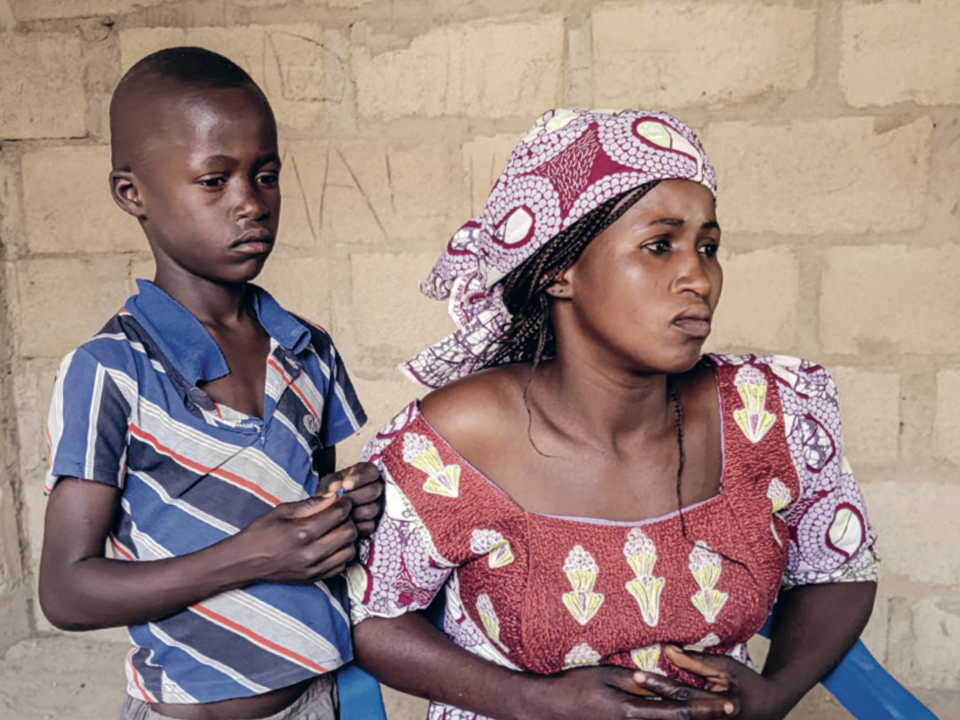
Involving local Christian leaders and other religious minorities in planning for Myanmar’s future is key to combatting violent Buddhist nationalism, CSI told the UN Human Rights Council in a statement.
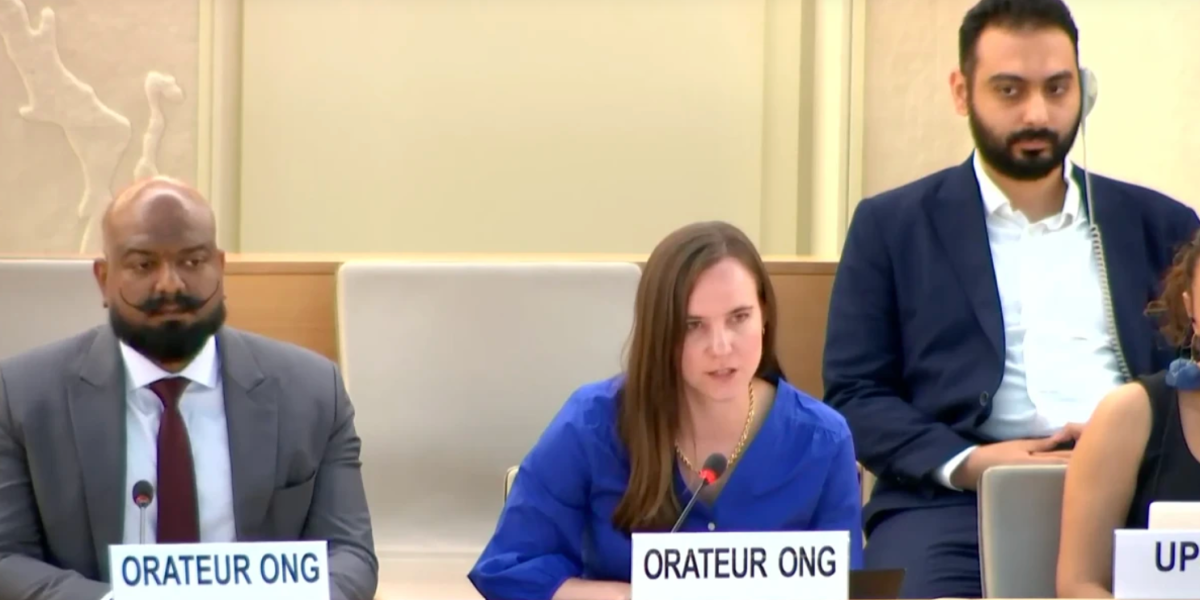
On July 27, 2025, CSI’s Abi McDougal delivered a statement on religious minorities in Myanmar before the UN Human Rights Council. un web tv
CSI at the UN: Faith leaders in Myanmar can fight Buddhist nationalism
CSI’s UN representative in Geneva, Abi McDougal, delivered a statement Friday, during an enhanced interactive dialogue with the UN High Commissioner for Human Rights Volker Türk and the Special Rapporteur on the situation of human rights in Myanmar Tom Andrews.
Statement
Christian Solidarity International believes that creating conditions for long-term peace in Myanmar must involve explicitly addressing religious freedom concerns.
Amid the widespread suffering of the civil war since 2021, Christian ethnic groups, such as the Chin and Karen, and Rohingya Muslims and Christians – who predominantly live in conflict zones – are particularly affected. These groups have already experienced decades of persecution by Myanmar’s successive military governments, which have sought to promote an inseparable Burmese and Buddhist identity.
We thank the Special Rapporteur for his clear condemnation of the continued military airstrikes following the 7.7-magnitude earthquake in March, despite declared ceasefires. We further ask him to consider the religious targeting of many of these attacks. The junta’s airstrikes have destroyed at least 300 places of worship, sometimes killing those who were inside. On April 10, two weeks after the earthquake, one regime airstrike that destroyed a church in Chin State killed a pastor along with his entire family.
With the recent collapse of the military regime’s control in much of the country, a crucial window has opened for practical, UN-led mechanisms—such as a scenario-planning working group—to support a future federal democratic transition and prevent further inter-ethnic and inter-religious strife.
We ask for explicit recognition of local faith leaders as a key constituency for change. Engaging Buddhist as well as religious minority faith leaders can spearhead the shift from Buddhist nationalism to religious liberty, laying groundwork for long-term peace.
Mr. Special Rapporteur, what mechanisms should be created to allow the UN system to engage with diverse religious stakeholders among Myanmar’s opposition groups to ensure a more just post-junta future?
Learn more about persecution of Christians and other religious minorities in Myanmar from CSI’s April interview with Dr. Sasa here.