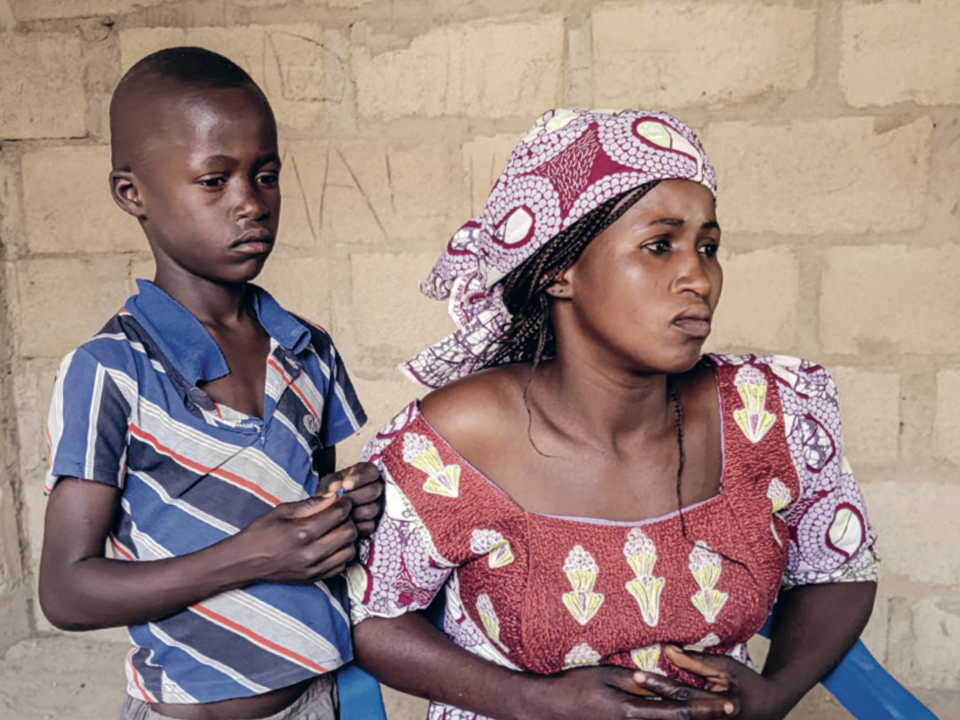
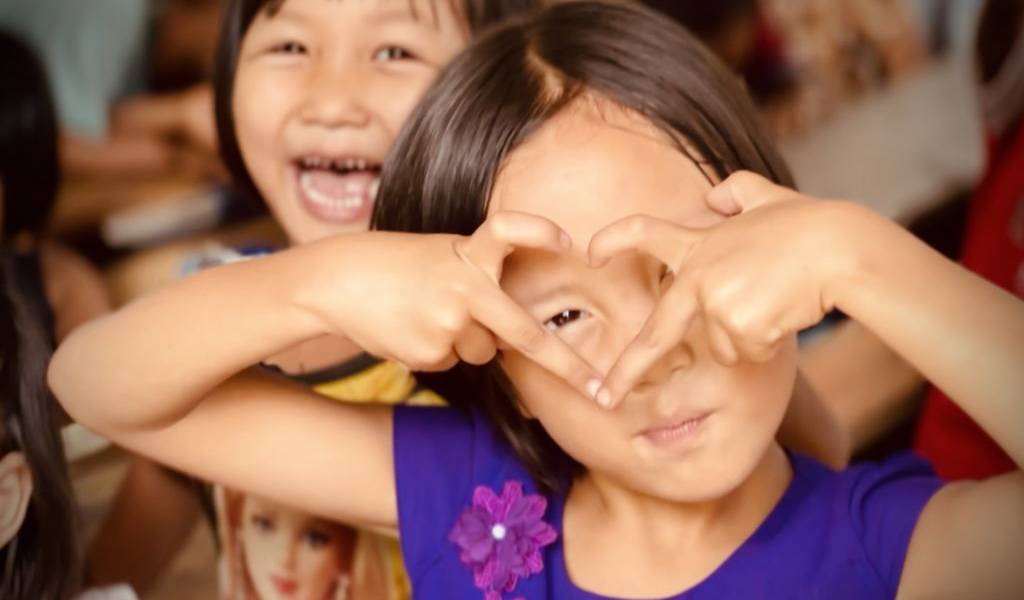
A disastrous civil war has been raging for decades in Myanmar, fueled by the ultra-Buddhist nationalism of the country’s military rulers. The impact on Myanmar’s Christian minority has been devastating. But new developments are now raising hopes of peace. CSI’s project manager for Myanmar gave an interview on the current situation to CSI-Germany.
CSI-Germany: CSI runs several aid projects in Asia. Where does Myanmar fit in to the work?
Project manager: CSI’s mandate is to stand in solidarity with persecuted and suffering Christians. Violence against Christian communities in Myanmar has increased massively since the end of the civilian government. Following the 2021 military coup, the ruling junta resumed all-out war against the county’s ethnic and religious minorities and its pro-democracy movement.
Myanmar’s ruling military has traditionally tried to impose national unity based on the supremacy of Burmese ethnicity and Buddhism over the 30 percent of the population that belongs to ethnic minorities. Most of Myanmar’s Christians – six percent of its population – belong to persecuted ethnic minorities, such as the Karen, the Chin, and the Kachin. They, like the Muslim Rohingya, are subjected to ferocious acts of ethnic cleansing. This pushes them into the bush or into refugee camps and settlements in neighboring Thailand, Bangladesh and India. There they lack food, health services and educational and employment possibilities. Myanmar’s military rulers strive to keep the ethnic and religious minorities impoverished, underdeveloped and powerless.
The European media don’t report on this at all. Why is that?
In Europe, reporting on international affairs is dominated by the interests of the strongest political powers and their semi-official information outlets. There are issues in which western governments have a strong interest and where they promote media narratives in an attempt to win over the general public to their policies. These include the war in Ukraine, the broader conflicts between the West and Russia and China, and the Israel-Hamas war. The pronouncements of western leaders and the issues they publicly address consistently make news headlines. The issues on which they choose not to speak receive very little media coverage.
What is the background to the persecution of Christians in Myanmar?
Portuguese Catholic priests brought Christianity to Myanmar, previously called Burma, in the 17th century. But it was not until the 19th century that missionary activity in this Buddhist-majority country really developed, and it was remarkably successful. The missionaries, largely European and American, enjoyed the protection of Burma’s British colonial rulers. Converts were largely drawn from the disadvantaged ethnic minorities, especially the Karen and Chin peoples.
Myanmar’s Buddhist political elite deeply resented this missionary activity and actively opposed it after independence in 1948. With the end of British protection, the military dictatorship banned missionaries. And it violently persecuted the minorities, who were seen as a threat to Burmese Buddhist-based national unity. The conflict continues to this day, and has intensified since the collapse of the military-civilian government in 2021.
What help does CSI provide in Myanmar?
Sagaing region, along the border with India, has the largest number of internally displaced people (IDPs) in Myanmar, estimated at 816,500 in November 2023. Some of the displacement is temporary, with IDPs fleeing as a result of conflict, raids, and crackdowns. However, hundreds of villages have been fully or partially destroyed. As a result, many displaced people will not be able to return home for the foreseeable future.
This is the context in which CSI’s project partner is working, providing humanitarian relief including food, shelter, water and sanitation and essential household items as well as cash grants.
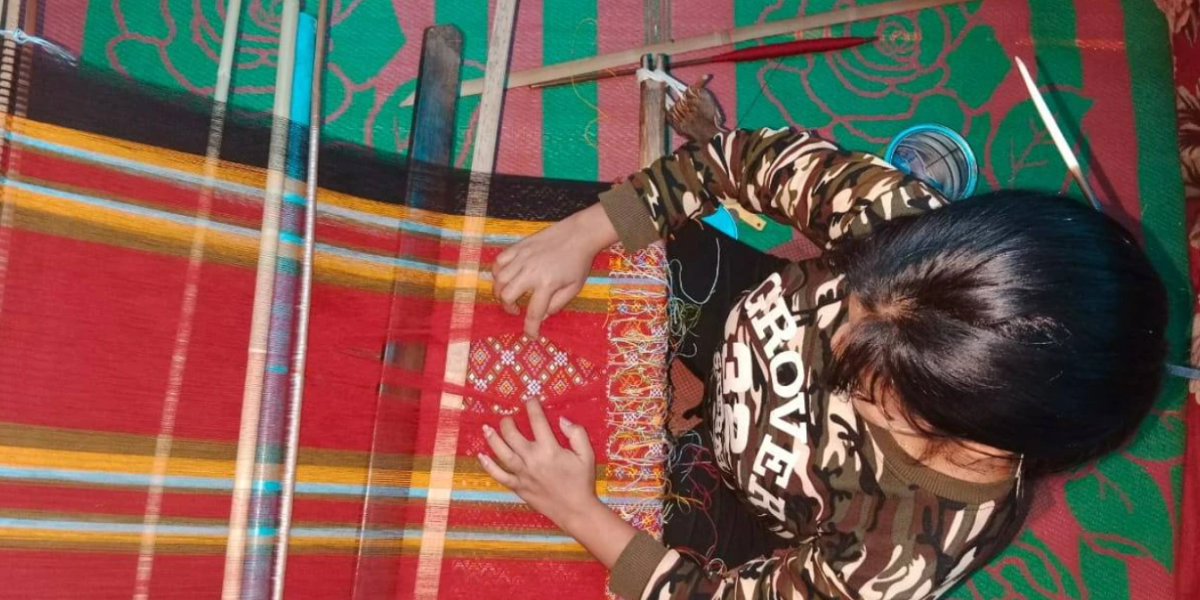
We also support projects that help people who have fled their homes to build new lives over the long term. Individuals acquire the skills needed to generate their own income and be self-sufficient. One such project focuses on weaving and dressmaking. In small groups, young women from socially disadvantaged backgrounds complete a customized training course, and then enter a program where they can earn money to purchase their own sewing machine. This gives them the tools to lift themselves out of poverty with transferable and much needed skills.
Is there any sign of an end to the conflict?
There are grounds for cautious optimism. But in the past decades there have been hopeful signs of peace that have proven to be illusory. Over the past year China and the United States have been quietly cooperating behind the scenes to put pressure on Myanmar’s military dictatorship to reach terms with a coalition of ethnic minorities and pro-democracy Burmese. Both China and the U.S. are interested in peace because they need economic growth. The continuing civil war is causing devastation and is not conducive to economic development.
This is one of the few areas where the U.S and China can cooperate. What seems to be happening is that China is providing some low-level support to the anti-regime armed forces to pressure the military dictatorship to negotiate in earnest with the opposition. In recent months the opposition has scored some unprecedented victories on the battlefield near the Chinese border. These victories would have been impossible if China were backing the government forces.
How likely is it that there will be a negotiated settlement?
Only time will tell. The military rulers have called for a dialogue with the armed opposition. But they are extremely ruthless and will not voluntarily give up political power without solid guarantees of security for themselves and the financial fortunes that they have amassed.
We sincerely hope and pray that the junta will enter into an honest political dialogue and respond to the concerns of the ethnic minorities and pro-democracy groups. This alone will bring about a peaceful solution. The exclusion of Myanmar from the leadership of the ASEAN regional bloc in 2026 is interesting in this context. * The international community clearly wants to play a decisive and ultimately positive role. It is sending a clear message of disapproval to Myanmar’s military government. It is precisely this international pressure that urgently needs to be increased to steer Myanmar towards a more democratic and inclusive future that embraces the internal opposition.
*The leadership of ASEAN (Association of Southeast Asian Nations) rotates annually based on the alphabetical order of its members names.
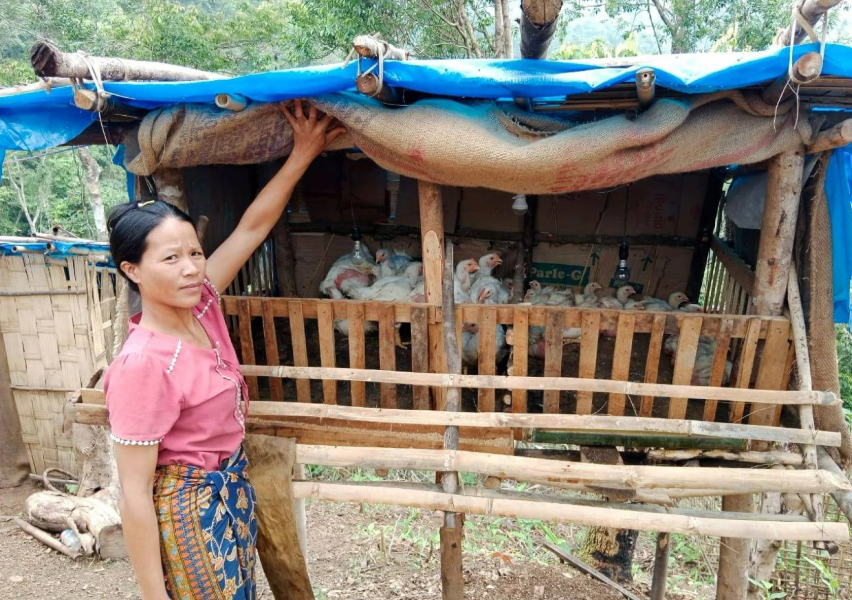
This woman received a livelihood grant to start raising poultry. csi
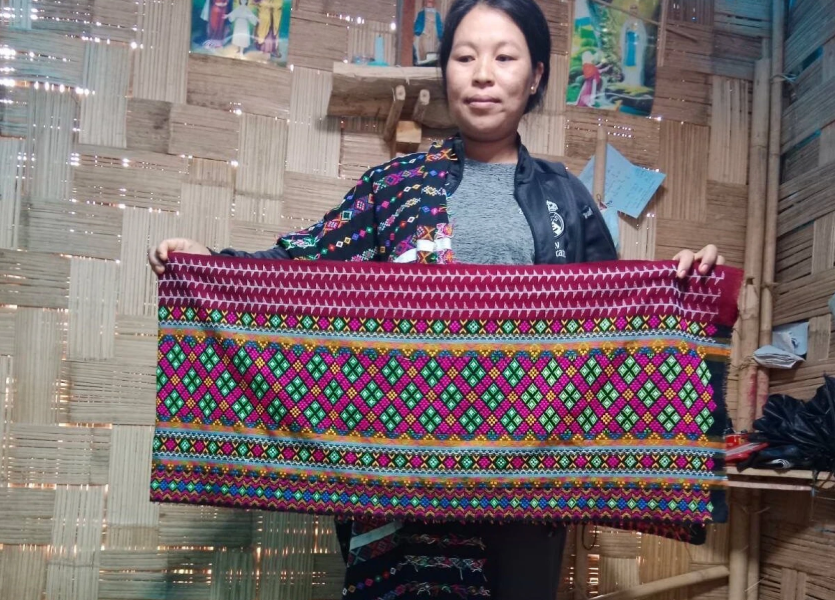
A participant in the weaving program shows off her work. csi