An interview with an Egyptian local human rights activist reveals how discrimination of Christians is built into the country’s laws and social fabric. Recent attacks and international reports confirm that the discrimination is continuing.
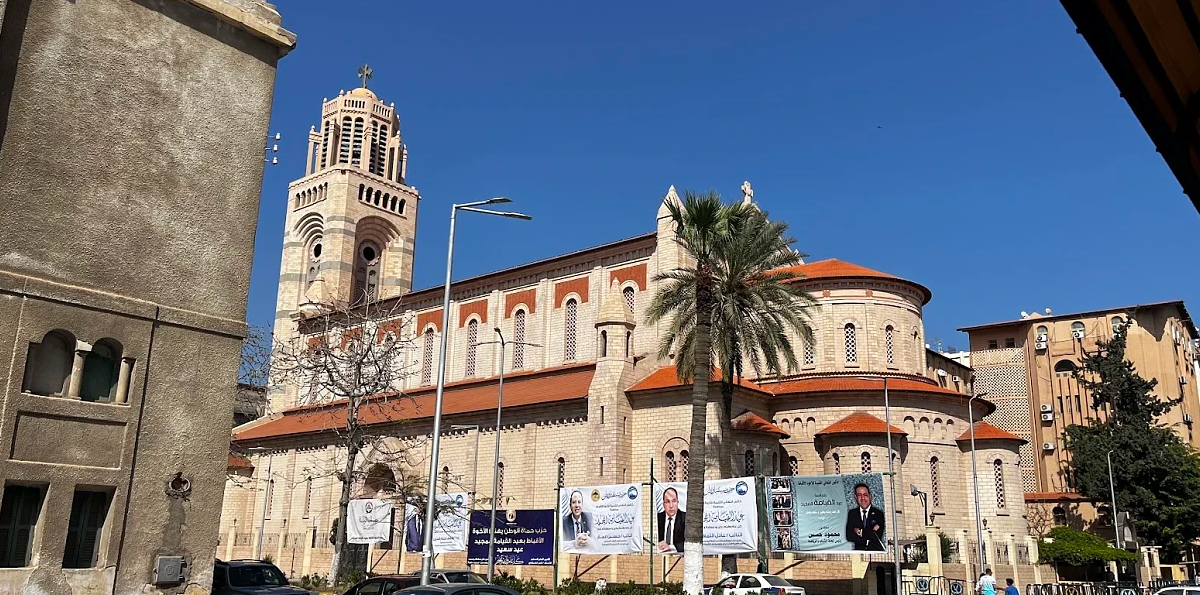
Obstacles to constructing churches are one way in which Christians face discrimination in Egypt. csi
According to the United States Commission on International Religious Freedom 2025 annual report, Egyptian authorities continue to use blasphemy laws against minorities and restrict their religious freedom.
One of the biggest challenges for Christians is getting permission to build new churches. A 2016 law that was supposed to make it easier has not solved the problem. The rules for building a church are still much stricter than for building a mosque.
The activist interviewed by CSI (for security reasons, neither his name nor the organization he works for can be mentioned) shared a story that illustrates how this works in practice. One Christian community tried to buy land for a church on 16 occasions, he said. Each time, a small mosque was quickly built nearby, which made it illegal for the church to be built there.
Because it’s so hard to get official building approval, many Christians are forced to worship in private buildings, like homes or warehouses. This puts them at risk. In April 2024, after rumors spread about a house being turned into a church, Muslim mobs attacked Christian homes in two different villages, setting some on fire. Meanwhile, the government committee that approves church permits works slowly.
Laws that discriminate
Egypt’s legal system contains rules that disadvantage Christians. So-called “blasphemy laws” are used to punish people for offending religious sentiment, and the rules are often interpreted very broadly. Christians, as well as Muslims with non-orthodox views, can be targeted for something as simple as a social media post.
Recent cases show this is still happening. In July 2024, a military court sentenced a Christian soldier to three years in prison for supposedly committing blasphemy in a private text message. While two other Christians were released in early 2025 after spending years in prison on similar charges, the laws themselves have not changed.
Other laws create deep divisions in family life. For a Christian man to marry a Muslim woman, he must first convert to Islam. The same is not required of a Muslim man who marries a Christian woman. As the activist interviewed by CSI explained, this one-sided rule can cause serious social conflict and even lead to violence.
Issues fueling conflict
According to the activist, the problems go deeper than just unfair laws. Several other factors make life difficult for Christians.
One major issue is poverty. In poor neighborhoods, Muslims often oppose the construction of new churches because that can change the power balance in those communities. Churches can provide their own social services, like healthcare, education, and even help finding jobs. When Muslims don’t have access to similar services, the church comes to be seen as giving Christians an unfair advantage, which causes resentment and reactivates religious hatred.
It’s worth noting that mosques and Islamic organizations, including Salafi and Islamist groups that primarily function as charities, also provide extensive social services throughout Egypt. This suggests that the opposition to Christian community services may stem less from an actual lack of alternatives for Muslims than from deep-seated concerns about social hierarchy.
For some Muslims, the issue appears to be not the absence of services, but rather the perception that dhimmis, non-Muslim minorities who historically held subordinate status in Islamic society, are seen as improving their social standing.
Harassment of human rights defenders
The activist also noted that human rights organizations that advocate for freedom of religion can face harassment from the government. Their activists can be imprisoned, banned from traveling or blocked from having bank accounts, making it nearly impossible for them to continue their work.
In the end, the activist believes the only way forward is to tackle the problem’s roots such as fighting poverty, improving education, and allowing more political freedom. He stresses the need for a real commitment to equal citizenship for all people, not just a “shallow religious tolerance” of a minority.
To learn more about CSI’s work in Egypt click here.