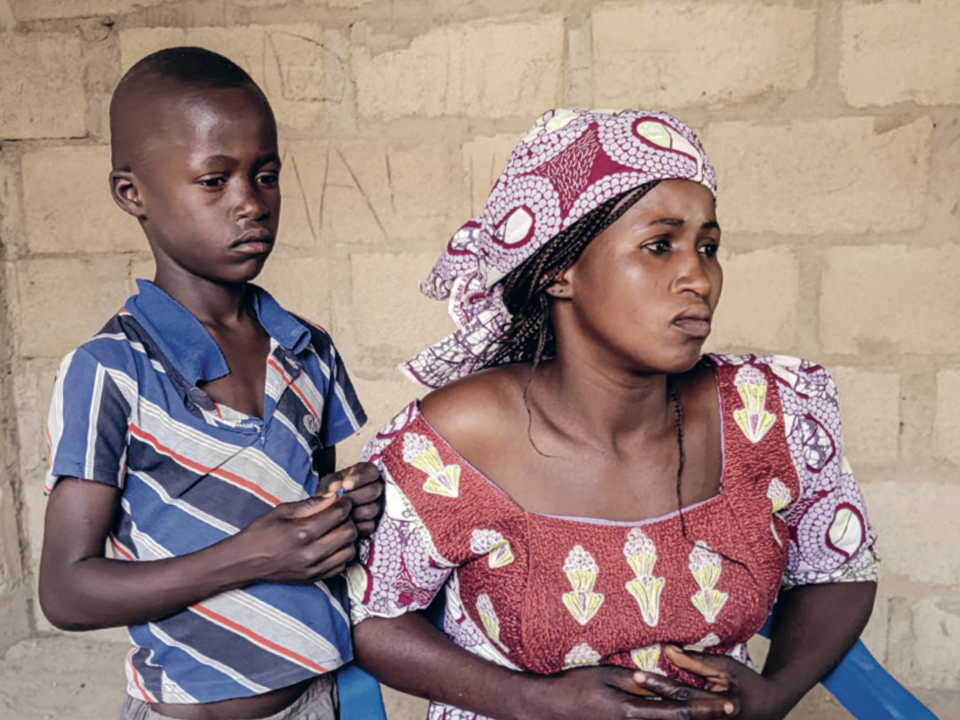
Alice Stephen and her seven-year-old son miraculously survived a brutal attack on their Christian village by suspected Muslim Fulani herdsmen. But the wounds – psychological as well as physical – will take a long time to heal.

On the night of 13 April 2025 – the start of Holy Week – suspected Fulani militants burst into Zike, a Christian community in Nigeria’s central Plateau State, opening fire on villagers. Within a few hours, at least 56 people were dead from gunshot or machete wounds.
Among the survivors was Alice Stephen, who suffered unimaginable personal loss. Her husband, two young children, and six family members were killed. Her seven-year-old son, Nenche, was the only other member of the family to survive. He had been left for dead with a machete cut to the back of his head.
“His relatives discovered him the following morning, still alive but gravely injured,” said Christian Solidarity International (CSI) project manager Franco Majok.
Husband, toddler and baby slaughtered
Nenche’s mother, who tried to protect her children, suffered a terrible injury in the attack.
“We were asleep when the attackers came,” Alice Stephen recalled during an emotional meeting with Majok a few days later at the hospital where she and her son were being treated. “They stormed into our room, shooting and slashing with swords. They killed my husband in front of me and then murdered my baby, Mary, who was just eight months old, and Nanna, my three-year-old daughter.
“I tried to protect my children but was attacked and lost my hand,” said Alice, breaking down in tears.
“Since the attack, life has become unbearable. We lost our home, our support system, and any sense of security,” Alice’s brother-in-law, Peter John, told CSI. “Alice can no longer farm or run a business. Nenche needs a new school, but we can’t afford one. We don’t even have enough food or a place to live.”
Hospital under strain
The CSI team also met Dr. Joseph Abel, the Managing Director of Enos Private Hospital, where Alice and Nenche were treated. He expressed concern over the rising number of unpaid medical bills for victims of attacks. Though he continues to treat patients regardless of their ability to pay, Abel emphasized the strain it places on the hospital:
“This is my contribution to humanity, but this hospital is still a business that needs to stay operational. If the debts continue to pile up, we may be forced to shut down—leaving future victims without help.”
With support from CSI, Alice is slowly beginning to rebuild her life. Through its local partners, CSI is providing Alice and Nenche with a new place to live, as well as covering food and school fees.